

February station travel has its own rhythm: bulky coats, wet floors, packed platforms, delayed services, and sudden surges around school breaks or holiday weekends. After years of moving through busy rail stations with luggage, I trust simple routines more than clever gear or last-second decisions.
Why February crowds create different station risks
Winter clothing changes how people move
Heavy coats, scarves, gloves, and hoods reduce peripheral vision and make quick movement harder. A traveler may not hear a warning over a hood or notice a bag slipping open beneath a long coat. Wet fabric also makes people slower at ticket gates, stairs, and narrow escalators, which creates stop-and-go waves behind them.
Cold weather adds another problem: people focus on getting indoors. They look down at wet tiles, search for gloves, or rush toward a warm train carriage. That is when they miss platform signs, walk into closing doors, or stand too close to the edge while checking a departure board. I slow down during the first five minutes inside a station because those are the moments when everyone else seems to speed up.
February crowds are often uneven, not constant
A station can feel calm at the entrance and become dangerously tight near one staircase, ticket machine, or platform exit. The largest risk is not always the total number of people. It is the sudden compression of people into a small area. A delayed train, a blocked escalator, or an announcement that changes platforms can turn a normal crowd into a moving wall within seconds.
My rule is to identify two escape routes before joining a dense group. One route should lead toward a staffed area, and the other should lead away from the platform edge. If the crowd stops moving, I do not push forward simply because other travelers are still pressing from behind. I step sideways into open space, let the surge pass, and check the sign again.
A 10-minute arrival routine prevents most avoidable mistakes
Use the first three minutes to orient yourself
- Stop just inside the station entrance instead of walking while reading signs.
- Find the main departure board and confirm the train number, destination, platform, and scheduled time.
- Locate one staffed information point, one public exit, and one restroom or quiet area.
- Check the route from the concourse to the platform before the crowd thickens.
- Keep your ticket, passport, and phone in the same secure place throughout the visit.
This routine takes about three minutes when the station is familiar and closer to five minutes in a large terminal. It prevents the classic mistake of following a crowd that is traveling toward a different train.
Use the remaining seven minutes for a calm platform check
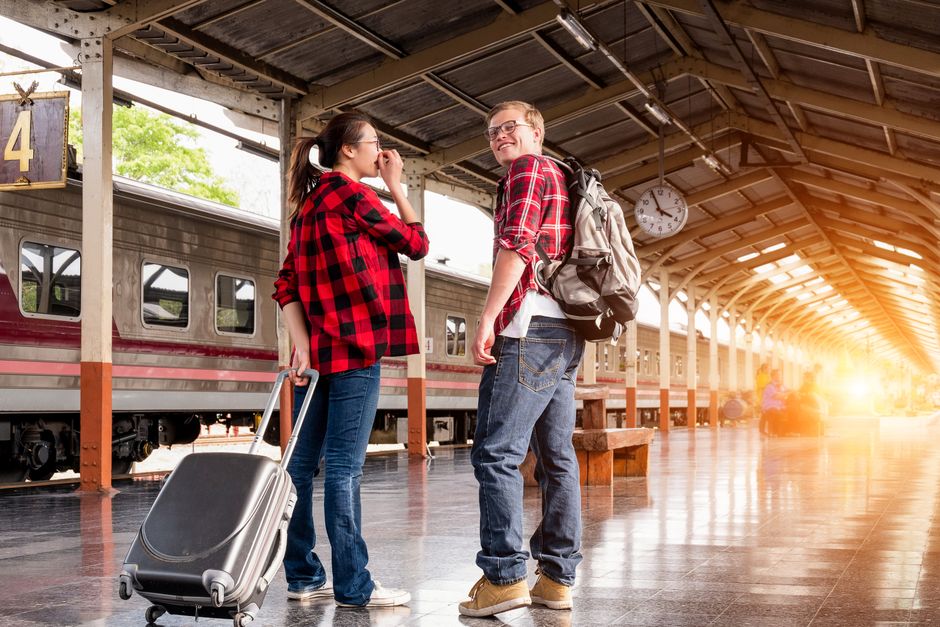
At the platform, confirm the destination on the carriage display rather than trusting the people around you. Check the boarding zone, accessibility area, and direction of travel. If you have luggage, place it where it cannot block an aisle, doorway, or stair landing. A bag beside your feet is easier to control than a bag behind your back in a compressed crowd.
Leave a margin for delays. For a major station, I prefer arriving 20 to 30 minutes before departure, especially with luggage or a transfer. For a small station on a familiar route, 10 to 15 minutes may be enough. The point is not to arrive absurdly early. The point is to avoid making navigation decisions while running.
How to protect your phone, wallet, and passport in a crowd
Most travel theft problems begin with divided attention. One person asks for directions, another brushes past, and the traveler reaches for a phone while holding a ticket, coffee, and luggage handle. Crowded stations reward simple storage habits. I use one secure location for important items and refuse to move them around during a journey.
| Item | Safer location | Habit to avoid | Quick check |
|---|---|---|---|
| Passport | Closed inner pocket or zipped compartment | Back trouser pocket or open coat pocket | Touch the compartment after every gate or border check |
| Wallet | Front pocket with a closed fastening | Loose side pocket in a backpack | Keep only the cards and cash needed for that day |
| Phone | Closed pocket when not in use | Holding it loosely while walking | Put it away before entering a staircase or train door |
| Day bag | In front of the body in dense crowds | Worn behind the back near platform bottlenecks | Check every zipper before boarding |
| Travel documents | One labeled document sleeve | Scattered across coat and luggage pockets | Count documents before leaving the train |
Keep your hands free during crowd changes
When a train arrives, people shift quickly and bags get pressed against legs. That is the worst moment to search for a ticket or open a wallet. I prepare the ticket before reaching the gate, then put it away immediately after the scan. At the platform, I keep one hand available for a rail or a child rather than carrying loose items in both hands.
Do not let a helpful distraction control your attention
Legitimate travelers ask for help, but a busy station is the wrong place to hand a stranger your phone or wallet. If someone needs directions, step toward a staffed desk before assisting. If a person bumps into you, stop in a visible area and check your pockets without displaying every item. My clear verdict: secure storage beats constant suspicion, but open pockets and loose phones are invitations to trouble.
The safest platform habit is boring and non-negotiable
Stand behind the marked safety line
Leave the platform edge before you do anything else. When I need to read a message, check a ticket, or adjust a suitcase, I move behind a column or toward the center of the platform first; that small pause keeps my attention off the tracks, prevents luggage wheels from rolling into the boarding lane, and gives other passengers room to pass without a shoulder-to-shoulder collision.
Boarding order matters less than controlled space
I do not compete for the first open doorway, because rushing creates more risk than it saves time; I wait for exiting passengers, keep one hand on my bag, step into the carriage only when there is room, and move away from the doorway after boarding so the next wave can enter, which is slower by a few seconds but far safer during a February rush.
February mistakes that create avoidable station risk
My strongest opinion is that rushing is the most expensive travel habit. It causes missed signs, open zippers, unsafe boarding, and arguments with staff. Most of the following mistakes come from trying to save less than five minutes.
These habits cause the most trouble
- Walking while reading a departure board instead of stopping in a clear area.
- Standing at the bottom of an escalator to reorganize luggage.
- Keeping a passport in a coat pocket that is covered by a scarf or bag strap.
- Using headphones so loudly that platform announcements become impossible to hear.
- Taking photos near the platform edge while watching the screen instead of the surroundings.
- Leaving a suitcase unattended while buying food or checking a timetable.
- Assuming a familiar station will operate normally during weather, construction, or a major event.
Replace speed with a repeatable sequence
Use the same sequence every time: stop, check the sign, secure the important items, identify the exit, then move. The sequence feels slower only on the first few trips. After that, it becomes automatic and leaves more attention for slippery floors, unusual crowd movement, or a traveler who needs help.
Do not overcorrect by treating every stranger as a threat. Ask staff for help, keep your belongings closed, and stay aware of your surroundings without staring at everyone. The best safety posture is calm, observant, and ready to move.
My February station plan and final recommendation
Before leaving the hotel or home
Check the route, weather, service status, and the station’s planned entrance. Wear shoes with reliable grip, keep one warm layer accessible, and carry only the documents and payment methods needed for the journey. Write down the destination, train number, and a contact number in case your phone battery fails. Tell one trusted person your broad route when traveling alone.
Set a simple communication plan before entering the station. Decide where to meet if separated, what to do after a missed connection, and who will hold the essential documents. Families should give children a short rule they can remember: stop, stay visible, and find staff.
The routine I would use every time
Arrive 20 to 30 minutes early at a major or unfamiliar station. Stop at the entrance, confirm the platform, secure your phone and documents, and identify two exits. On the platform, stay behind the marked line, let passengers leave before boarding, and move away from the doorway once inside. During delays, step out of the crowd instead of pushing toward the source of the problem.
My final recommendation is specific: arrive early enough to watch the station settle, keep your passport and wallet in one closed front-facing compartment, and treat the platform edge as a permanent no-phone zone. Those three habits handle the biggest February risks—rushing, divided attention, slippery crowd movement, and misplaced valuables—without adding complicated equipment or stress to the trip.