
Everyone talks about the North Coast 500, and sure, it’s a decent drive. But if you think that’s the be-all and end-all of UK road trips, you’re missing out on the real magic. I’ve been crisscrossing these islands for over a decade, from the tip of Cornwall to the remotest corners of the Scottish Highlands, and I’ve made every mistake in the book so you don’t have to. The biggest one? Believing the hype. The true gems, I’ve found, are often the quieter, less-trodden paths. My goal here is to steer you away from the common pitfalls and towards genuinely incredible adventures.
Forget the North Coast 500: The Real UK Road Trip Gem I’ve Found
Look, the NC500 is marketed hard. It’s got that allure of remoteness and epic scenery, but I’m going to be blunt: it’s often overcrowded, especially in summer, and the infrastructure struggles under the weight of so many visitors. You end up feeling like you’re on a conveyor belt, jostling for a photo spot or a table in a pub. If you want true solitude and breathtaking landscapes without the tourist circus, you need to look south, into Wales.
Why the NC500 Isn’t Always the Best Choice
The issue with the North Coast 500 isn’t its beauty; it’s the sheer number of people doing it. Picture this: you’re trying to navigate a single-track road, and you’re constantly pulling into passing places for a never-ending stream of motorhomes. Campsites are booked solid months in advance, and the charming little cafés you read about have queues out the door. It forces a certain pace and takes away the spontaneity that makes a road trip special. I remember one August, trying to find a quiet spot near Ullapool, and it felt more like a festival car park than a remote Scottish lochside. Not my idea of an escape.
My Secret Alternative: The Heart of Wales & Brecon Beacons Loop
Instead of the NC500, I always recommend the Heart of Wales & Brecon Beacons Loop. Start in Hereford, head west into the rolling hills of Mid-Wales, then south into the dramatic Brecon Beacons National Park, and loop back east. This route offers an incredible mix of serene countryside, challenging mountain passes, and quaint market towns, all without the overwhelming crowds. You’re looking at a manageable 300-400 mile trip, easily done in 4-6 days, allowing plenty of time for walks and explorations. The views through the Black Mountains are every bit as stunning as anything you’ll find in Scotland, often with just you and a few sheep for company.
Essential Detours & Overnight Stays
When I do this loop, my first stop is usually Hay-on-Wye, the ‘Town of Books.’ Spend a morning browsing the independent bookshops. From there, I push west towards Llandovery and then into the Brecon Beacons. Make sure to drive the A4069, often called the Black Mountain Pass or ‘Top Gear Road.’ It’s a winding, exhilarating stretch with incredible vistas. For overnight stays, I’ve had great luck with smaller, independent campsites near Brecon, like the one close to the Usk Reservoir – it’s basic but perfectly situated for stargazing. Another firm favourite is the area around Llangorse Lake; you can find some fantastic B&Bs or smaller caravan parks there. Don’t miss a hike up Pen y Fan early in the morning for sunrise; it’s a climb that rewards you tenfold.
My Non-Negotiable Planning Steps Before Hitting the Road

I learned the hard way that a bit of prep saves a lot of headaches on the road. Spontaneity is great, but not at the expense of running out of fuel in the middle of nowhere or sleeping in your car because every B&B is full. These are the three things I never skip.
-
Map Your Fuel Stops Meticulously
This sounds obvious, but you’d be surprised how quickly fuel stations disappear in rural Scotland, Wales, or even parts of Devon and Cornwall. I’ve run on fumes more times than I care to admit. Now, I always plot out major towns with petrol stations on my route. Crucially, I also check their opening hours. Some tiny village pumps close by 6 PM or aren’t open on Sundays. Also, be aware that fuel prices in very remote areas, especially in the Highlands or on islands, can be significantly higher. Fill up whenever you see a major town, even if your tank isn’t empty yet. Don’t assume the next one is just around the corner.
-
Always Book Accommodation (Or Wild Camping Spots) in Advance
Unless it’s the dead of winter, turning up in a popular area without a booking is a recipe for disaster. This isn’t just for hotels; it applies to campsites too. Even some wild camping spots, especially those popular with campervans, can fill up quickly, or might require pre-booking for a small fee or even permission from the landowner. National Parks and coastal areas are particularly bad for this during school holidays or bank holiday weekends. I use apps and local tourist information sites weeks ahead to secure a pitch or room. It might feel less spontaneous, but it guarantees you a bed for the night and saves hours of frantic searching.
-
Pack for All Four Seasons, Even in Summer
The UK weather is famously unpredictable. I’ve experienced glorious sunshine, torrential rain, and even hail in the same day in August in the Lake District. My packing rule is simple: always have good waterproofs (jacket and trousers), multiple layers (thermal base, fleece, light jacket), and sturdy, waterproof walking boots. Even if the forecast is for sunshine, it can turn on a dime. A small umbrella, a warm hat, and gloves often find their way into my car, even in June. You’ll thank me when you’re standing on a blustery headland or caught in a sudden shower miles from anywhere.
Choosing Your UK Road Trip Terrain: Mountains vs. Coast vs. History
The UK offers such diverse landscapes. Knowing what kind of scenery you’re craving makes planning much easier. I’ve driven them all, and each has its own unique flavour and challenges.
The Lake District vs. Scottish Highlands: A Driver’s Showdown
| Feature | Lake District | Scottish Highlands |
|---|---|---|
| Terrain | Rolling fells, deep valleys, large lakes. | Dramatic mountains (Munros), vast lochs, rugged coastline. |
| Roads | Steep, winding passes (e.g., Hardknott Pass), often narrow. | Longer stretches, A-roads, some very remote single-track. |
| Crowds | Can be very busy, especially around Windermere. | NC500 is busy, but vast areas remain quiet. |
| Highlights | Hiking, watersports, charming villages, Beatrix Potter sites. | Epic vistas, wildlife, distilleries, castles, dark skies. |
| Driving Pace | Slower, more challenging, focus on small villages. | Can be faster on main routes, but remote roads are very slow. |
For sheer driving challenge and concentrated beauty, the Lake District wins. Those passes are incredible, but they demand respect. The Highlands offer grander, more expansive views, but you need to be prepared for truly remote driving and longer distances between services. I’d pick the Highlands for a ‘get away from it all’ feeling, but the Lakes for a more active, village-hopping trip.
Southern English Coast vs. Cornish Peninsula Drives
If you’re after salty air and seaside charm, both the South Coast and Cornwall deliver, but they’re distinct. The South Coast (think Dorset, Devon) offers dramatic white cliffs, quaint fishing villages like Lyme Regis, and sweeping sandy beaches. The roads are generally good, though can get clogged in peak season. Cornwall, however, is a different beast. Its roads are notoriously narrow, often hemmed in by high hedges, and navigating them requires patience. But the rewards are spectacular: hidden coves, surf beaches, Poldark country, and incredible food. I prefer Cornwall for its wilder, more untamed feel, but be warned, those lanes are not for the faint of heart. Expect to reverse a lot.
Cotswolds Villages vs. Roman Roads: History on Wheels
For history buffs, the choice can be tough. The Cotswolds are picture-postcard perfect, with honey-coloured stone villages like Bibury and Bourton-on-the-Water. The roads here are gentle, winding through rolling hills, making for relaxed driving. It’s a gentle historical journey. If you want something a bit more rugged and ancient, consider exploring Hadrian’s Wall country or the Roman roads through places like the Peak District or parts of Wales. These often follow ancient routes, giving you a sense of deep history under your wheels. I’d pick the Cotswolds for a relaxed, pretty trip, but for genuine historical immersion and slightly more challenging drives, the northern Roman routes are unbeatable.
UK Road Trip FAQs: The Stuff No One Tells You

Over the years, people have asked me everything about driving in the UK. Here are some of the most common questions, and my honest answers.
“How do I handle single-track roads with passing places?”
This is probably the biggest learning curve for anyone new to remote UK driving. My rule: use passing places correctly. If you see a car coming towards you, and there’s a passing place on your left, pull into it and let them pass. If the passing place is on their left, they should pull in. The key is to anticipate and be courteous. Never pull into a passing place on the right unless it’s the only option and you’ve communicated with the other driver. And always wave a thank you! It’s just good manners. Also, slow down. You can’t drive these roads at speed; you’ll wreck your suspension or meet a sheep head-on.
“Is it really that hard to drive on the left?”
Honestly, it’s less about the ‘left’ and more about the gear stick being on the ‘wrong’ side if you’re used to right-hand drive, or simply adjusting your spatial awareness. My advice: practice in a quiet car park for 15-20 minutes before heading onto main roads. The biggest danger isn’t turning onto the left, it’s forgetting to look right first at junctions. Set a reminder in your head: ‘Look right, look right!’ Roundabouts are also a challenge; always yield to traffic already on the roundabout, and remember to signal correctly for your exit. After a day, it usually clicks.
“What about parking in tiny villages?”
Parking in charming, ancient villages is often a nightmare. Many have very limited spaces, and some are residents-only. My strategy: look for designated car parks on the outskirts of the village. They might be a 5-10 minute walk from the centre, but it saves endless frustration. Always carry plenty of change for pay-and-display machines, as signal can be patchy for app payments. Never, ever block a resident’s driveway or park illegally; wardens are active, and locals are understandably protective of their limited spaces. Some villages, like those in the Cotswolds, even have specific ‘visitor parking’ areas, so keep an eye out for signs.
Don’t Skimp on Breakdowns: My Golden Rule
This one is short and sweet. My golden rule after experiencing a few hairy situations in the middle of nowhere: always, always have comprehensive breakdown cover. It’s not sexy, it’s not fun to pay for, but when your alternator dies on a remote road in the Peak District, or you get a flat tyre on the Isle of Skye, that membership is worth its weight in gold. A few quid a month saves you a fortune in towing fees and stress.
Navigating Narrow Lanes and Wild Camping: UK Specifics
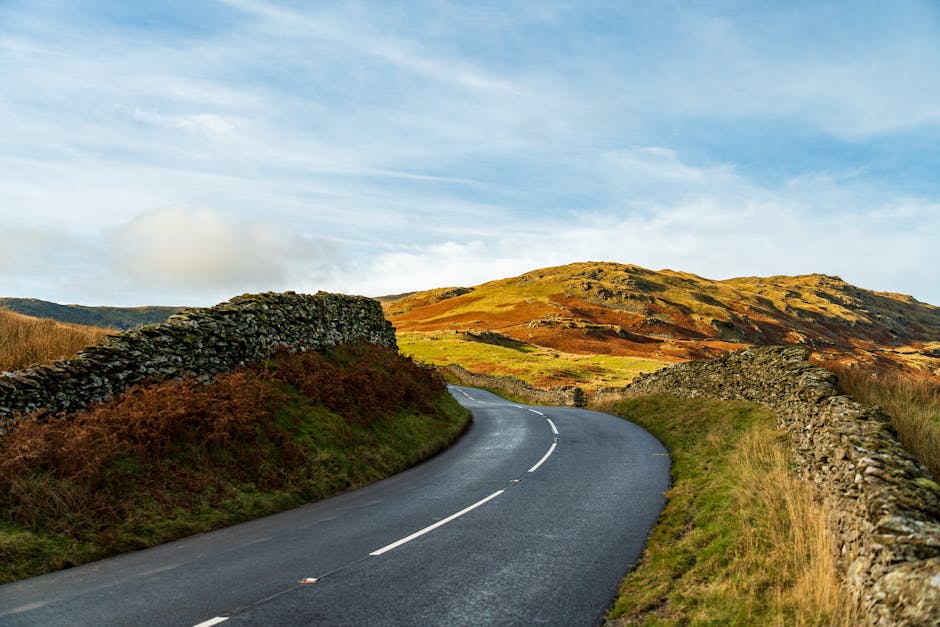
Driving the UK isn’t always about motorways. It’s often about truly testing your driving skills on roads that feel like ancient pathways. And if you’re planning to sleep under the stars, you need to know the local rules.
Mastering the Art of the Hedge Row Squeeze
Forget wide American highways; many UK rural roads are single-track or barely wider than one car, bordered by high hedgerows. This means restricted visibility and the constant threat of oncoming traffic. My technique: drive slower than you think you need to. Anticipate bends. If you can see a gap or a wider section of road ahead, use it to pull over slightly and give yourself space. When you meet another vehicle, sometimes it’s a game of chicken. Be confident but courteous. If you have to reverse, do it slowly and carefully. Wing mirrors are expensive to replace, and a scraped hedge isn’t a badge of honour. In areas like Cornwall or Dartmoor, this is just part of the everyday driving experience. You’ll get used to it, but it demands your full attention.
Understanding the Nuances of UK ‘Wild Camping’
The concept of ‘wild camping’ in the UK is very different from, say, North America or Scandinavia. In England and Wales, true wild camping is largely illegal without explicit landowner permission, except for specific areas like Dartmoor National Park, where it’s permitted with restrictions. In Scotland, the Land Reform (Scotland) Act 2003 generally allows wild camping, but with a strict ‘leave no trace’ principle. This means no fires, no litter, burying human waste well away from water sources, and moving on every night. I use apps like Park4night or local resources to find designated overnight parking spots or small, independent campsites that are less formal. Never assume you can just pull up anywhere and pitch a tent or park a campervan. Respect the local environment and private property; it keeps these privileges open for everyone.
Dealing with Livestock and Countryside Etiquette
If you’re driving through national parks or rural areas, you’ll encounter livestock. Sheep, cows, and even wild ponies roam freely on ‘common land’ like Dartmoor or the Scottish Highlands. My advice: slow right down. They have right of way. Don’t honk your horn; it stresses them. Just wait patiently for them to move. If you pass through a farm gate, always, always close it behind you unless it’s clearly marked otherwise. This prevents animals from escaping. It’s basic countryside etiquette, but it’s surprising how many people forget. Being respectful of the land, the animals, and the locals makes for a much smoother and more enjoyable trip.
So, there you have it. My years on the road have taught me that the best road trip isn’t about ticking off famous routes, but about embracing the unexpected, doing a little prep, and respecting the unique character of the UK. You won’t avoid every wrong turn or every unexpected shower, but with this advice, you’ll be far better equipped to truly explore these incredible islands and come away with memories that genuinely last.